0
₪0.00

India's protein gap what nut butter powder actually does about it

ICMR
data

15-food
comparison

8 min
read

73% of Indians consume less protein than the ICMR recommends. this article compares 15 common protein sources per 100g — including 6 defatted nut powders that most people don’t know exist.

according to the Indian Council of Medical Research, 73% of Indians consume less protein than the recommended daily amount. a 2026 survey by LocalCircles found that 60% of urban Indians are protein deficient — and 74% couldn’t even identify how much protein they’re supposed to eat.

the conversation around fixing this has been dominated by two options: whey protein (processed, expensive, often loaded with additives) or dal and paneer (whole foods, but lower in protein density than most people assume). there’s a third option that almost nobody talks about: defatted nut butter powder.

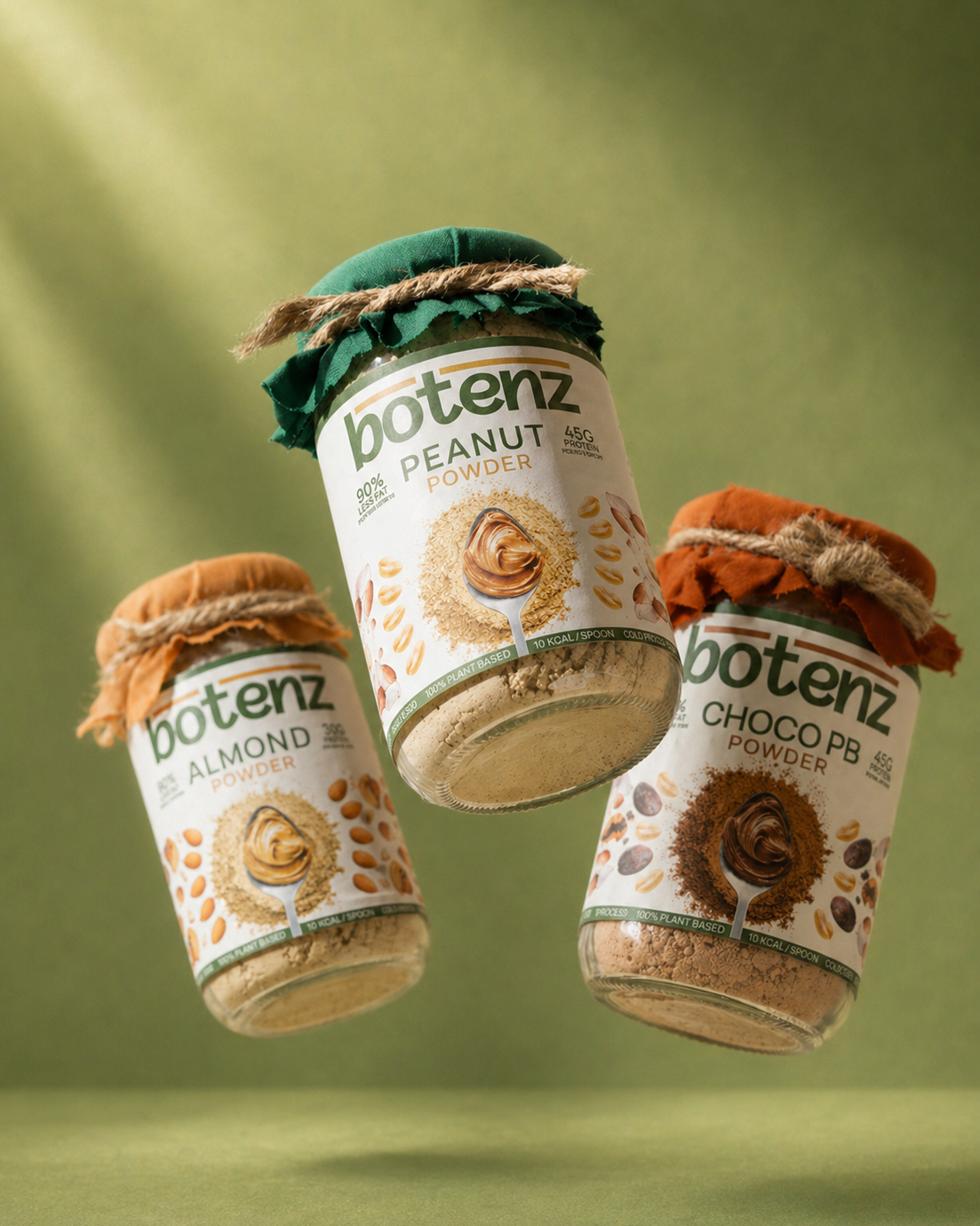
hero post14 protein gap c 1

the protein gap: what the data says

73% of Indians are protein deficient — ICMR-NIN dietary guidelines

peanut butter powder: 45g protein per 100g — nearly double raw peanuts (25.8g)

defatting concentrates protein without adding anything — it's still a whole food

+24g protein per day from 3 meals with powder — no change to your cooking routine

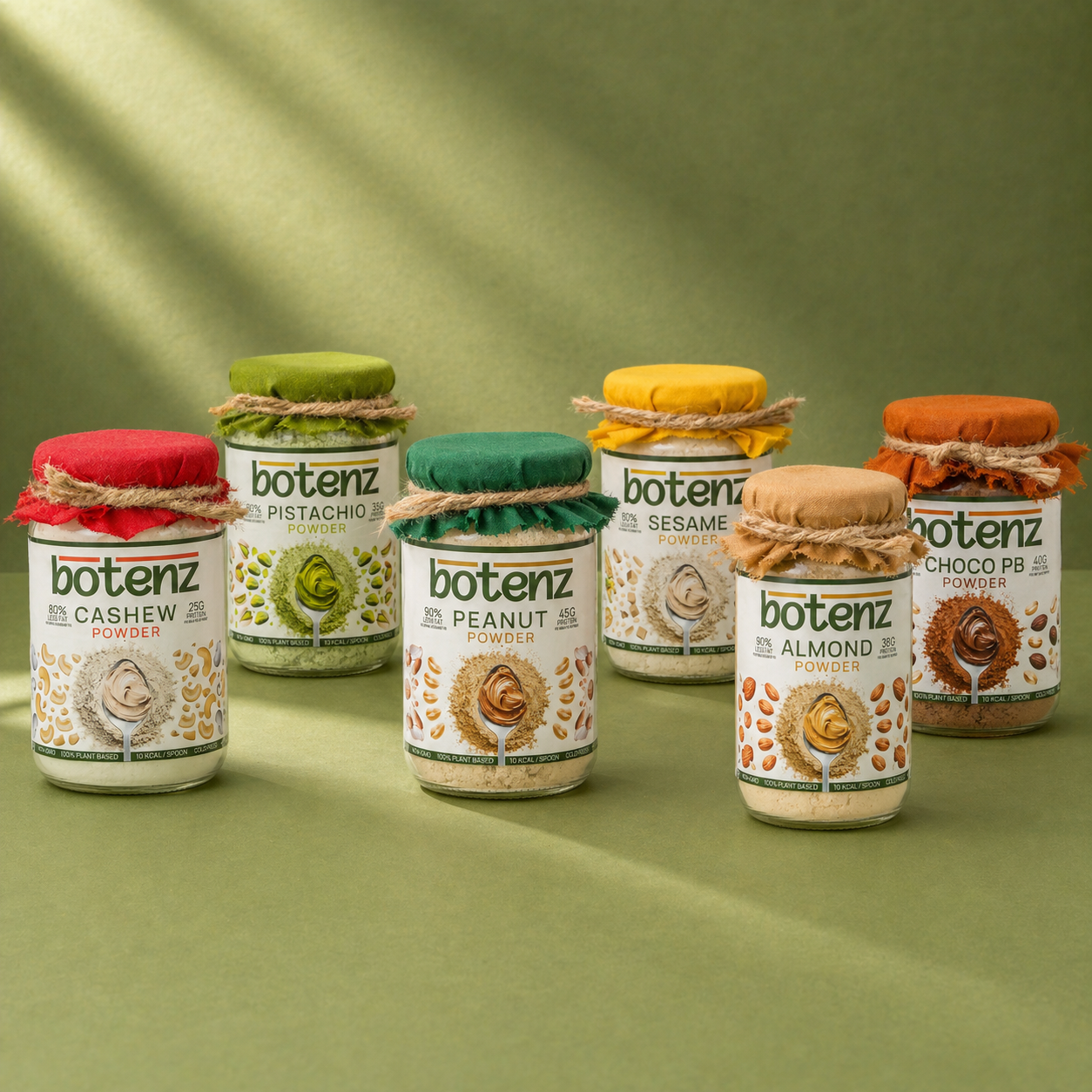
6 nut powders cover every Indian meal: oats, curry, latte, laddoo, baking, kids' milk

the numbers nobody compares

the problem with India’s protein conversation is that it stops at “eat more dal” or “buy protein powder.” neither is wrong. both are incomplete.

here’s what the actual protein content looks like when you compare common Indian protein sources side by side — per 100g:

protein per 100g: common Indian foods vs nut powders
45gPeanut butter powder
40gPeanut cacao powder
38gAlmond powder
ProteinFatType
Peanut butter powder45g13gWhole food
Peanut cacao powder40g13gWhole food
Almond powder38g13gWhole food
Pistachio powder34g13gWhole food
Chicken breast31g3.6gWhole food
Sesame powder30g17gWhole food
Cashew powder26g17gWhole food
Paneer18g20gWhole food
Eggs (2 large)13g10gWhole food
Curd/yogurt11g3gWhole food
USDA FoodData Central, Botenz product labels (2026)

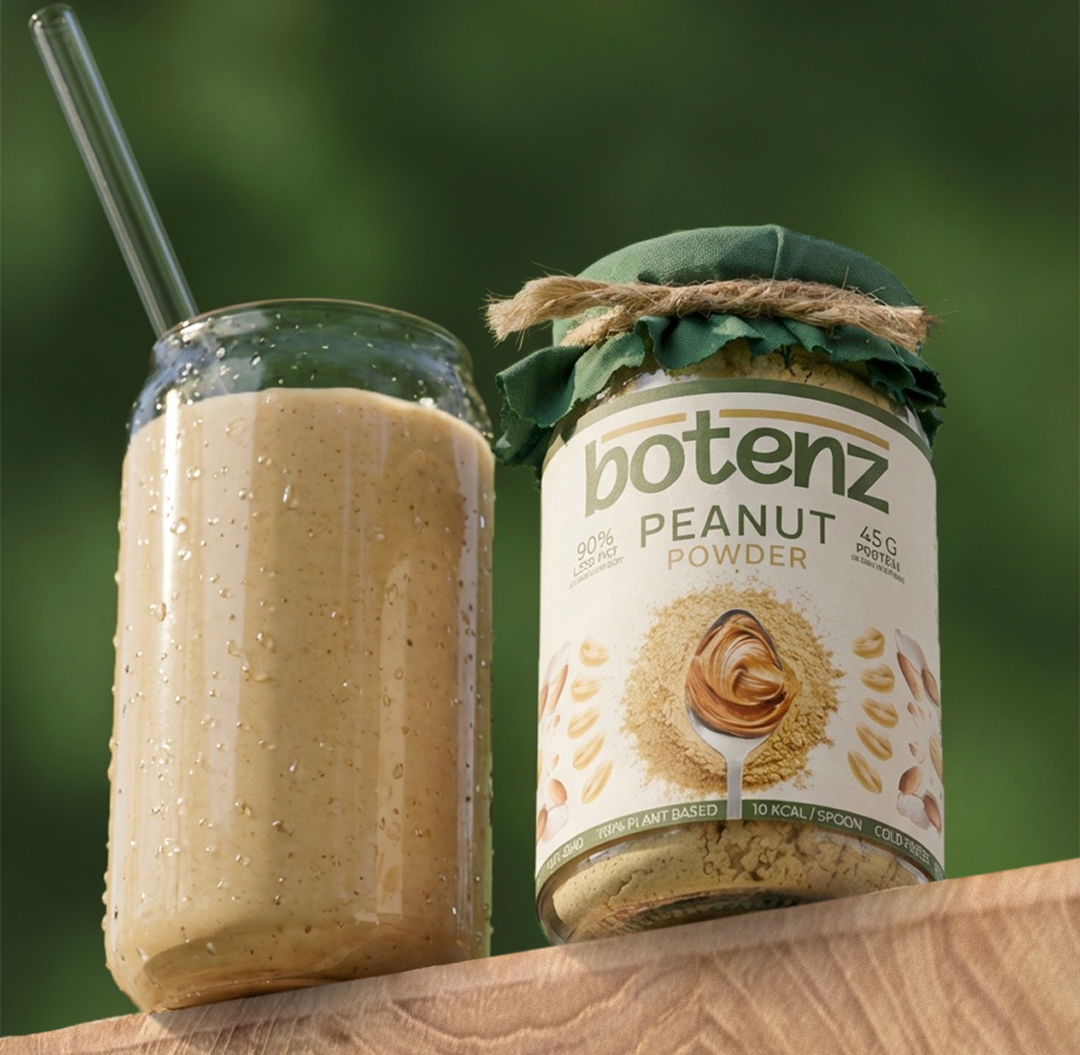
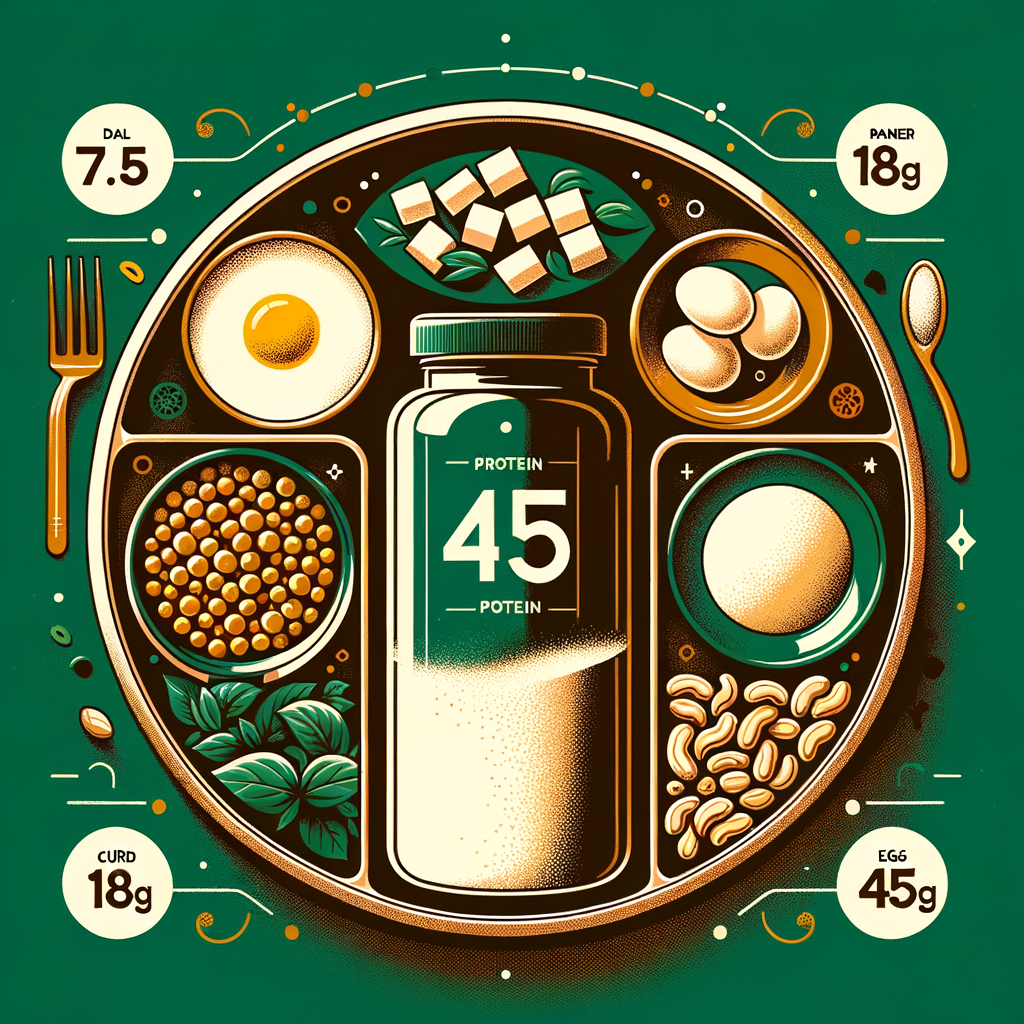
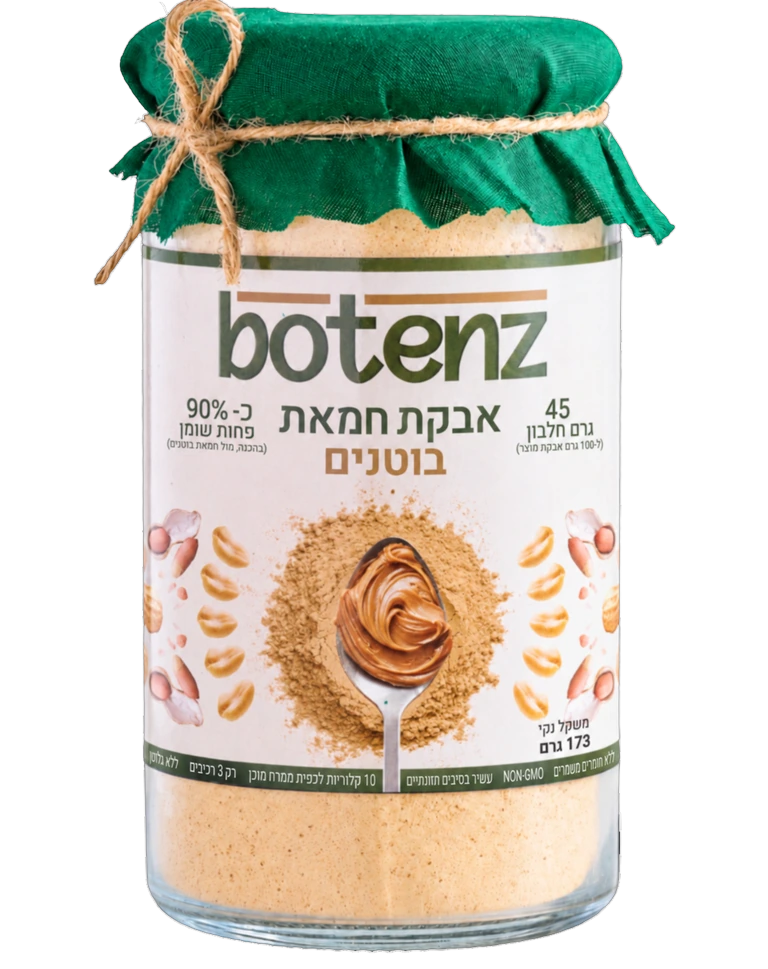
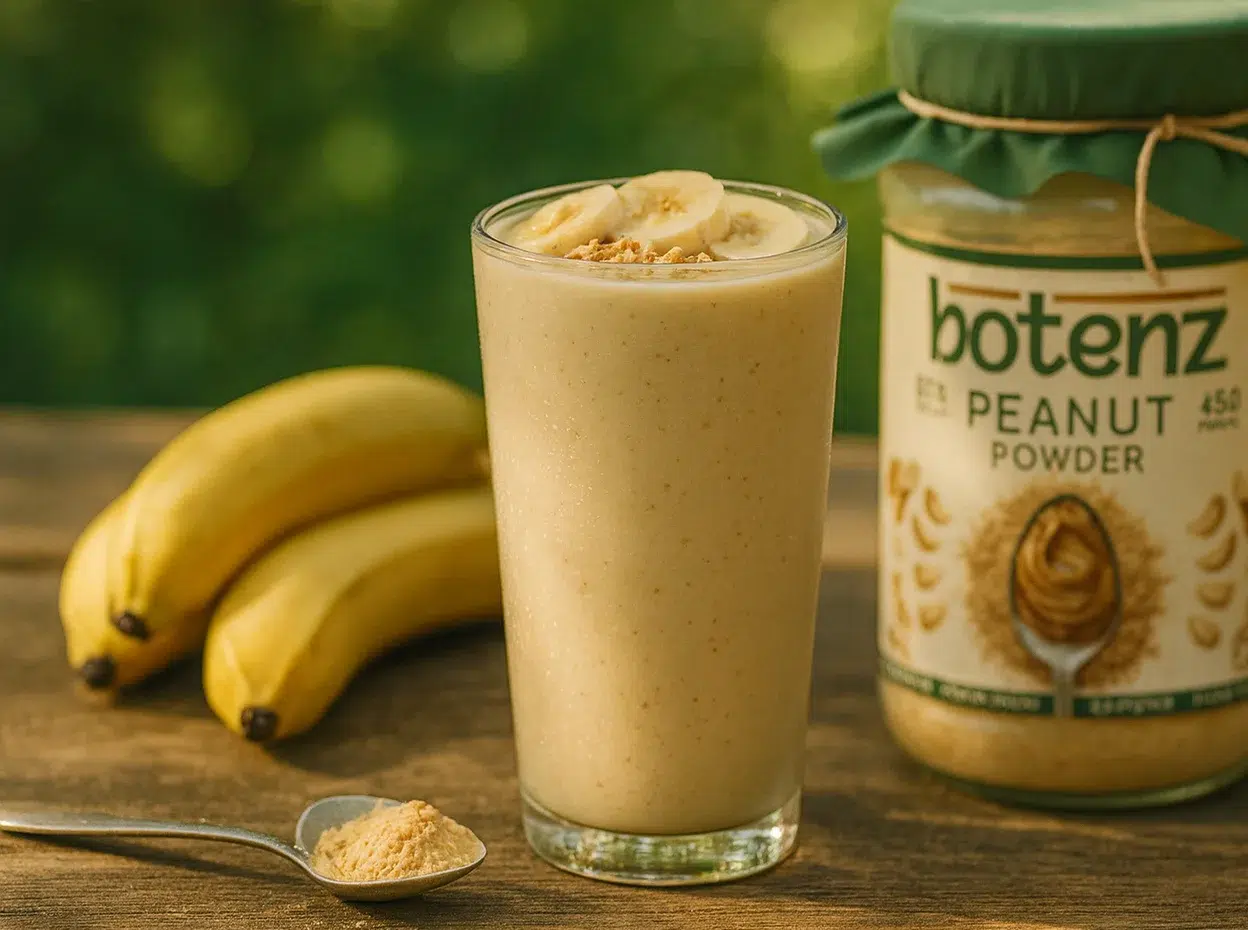
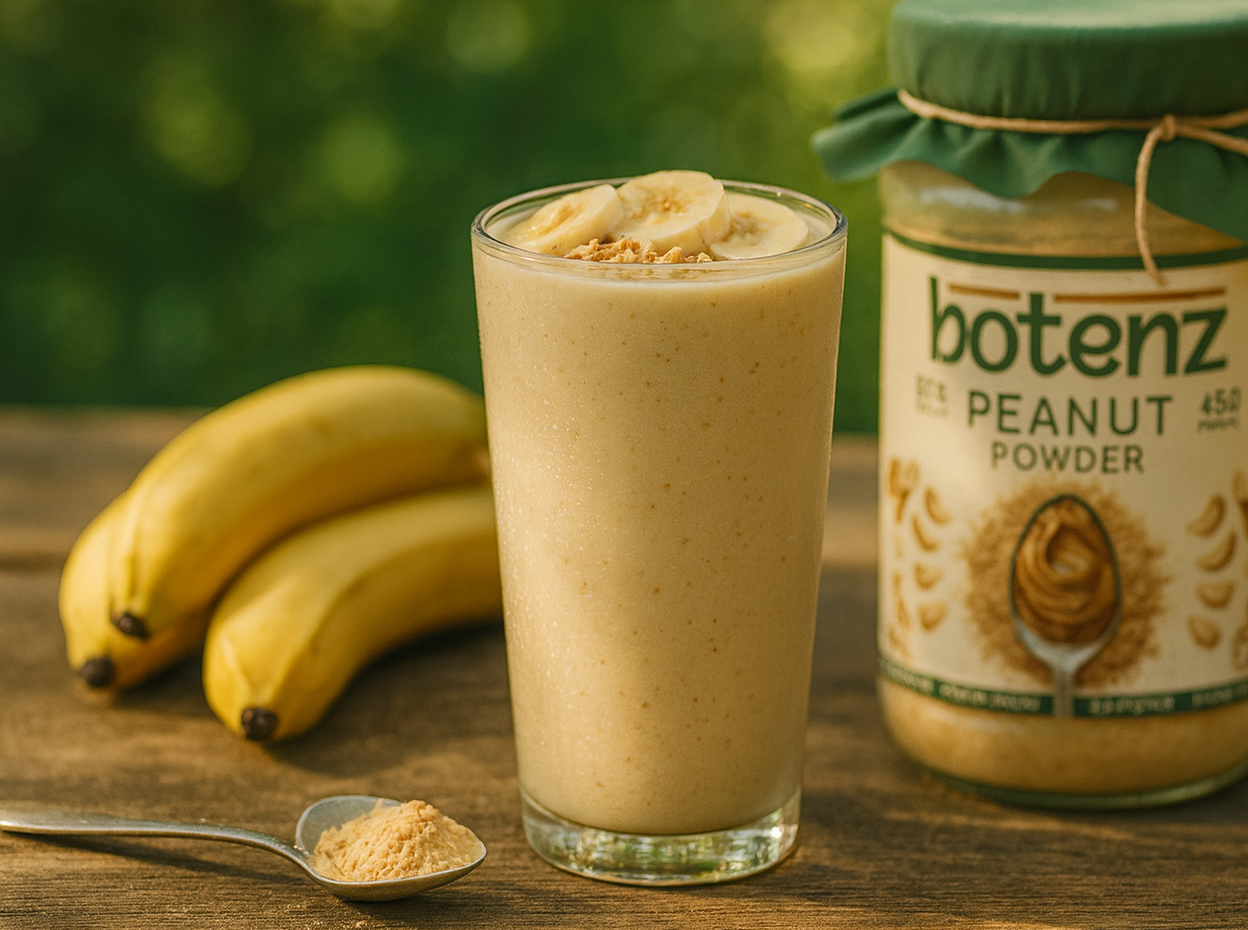
read that table carefully. peanut butter powder has 45g of protein per 100g — that’s nearly double the protein of raw peanuts (25.8g), with 73% less fat. it’s higher in protein per gram than chicken breast. and it’s a whole food — three ingredients (peanuts, coconut sugar, himalayan salt), cold-pressed to remove the oil.

this isn’t a supplement. there’s no extraction process, no chemical solvents, no added isolates. the protein concentration happens because removing the fat concentrates everything else — including the protein that was already there.

why the gap exists in the first place

the ICMR recommends 0.83g of protein per kilogram of body weight daily. for a 70kg adult, that’s about 58g of protein per day. sounds manageable — until you look at what people actually eat.

the math problem with dal: a typical serving of moong dal (one bowl, ~150g cooked) gives you about 11g of protein. to hit 58g from dal alone, you’d need to eat more than five bowls a day. nobody does that.

the math problem with paneer: paneer has 18g protein per 100g, but it also has 20g fat per 100g. and a “portion” at most meals is 50-75g, giving you 9-13g protein. two servings a day = 18-26g. you’re still short.

the math problem with curd: curd gives you 11g per 100g. a bowl of curd with lunch adds maybe 11-15g. helpful, but not enough on its own.

this is why the protein gap persists: the foods that Indian vegetarians eat every day are genuinely nutritious — but none of them are protein-dense enough to close the gap in normal serving sizes.

protein per 100g (grams) protein per 100g (grams) Peanut powder 45g Almond powder 38g Pistachio powder 34g Chicken 31g Paneer 18g Eggs 13g Curd 11g Dal (cooked) 7.5g USDA FoodData Central botenz.in

where powder fits
(without replacing anything)

the point isn’t to stop eating dal or paneer. it’s to add a protein-dense ingredient to meals you already eat — without changing the meal itself.

two tablespoons of peanut butter powder (about 20g) added to morning oats = 9g extra protein. that’s the equivalent of adding a whole egg to your breakfast without cracking one open.

three tablespoons of cashew powder stirred into your evening curry = 8g extra protein, plus the creaminess that the dish was getting from cream or yogurt anyway. Indian cooks already use kaju paste in korma, shahi paneer, and butter chicken gravy — powder is the same ingredient, defatted and ready to use without soaking or blending.

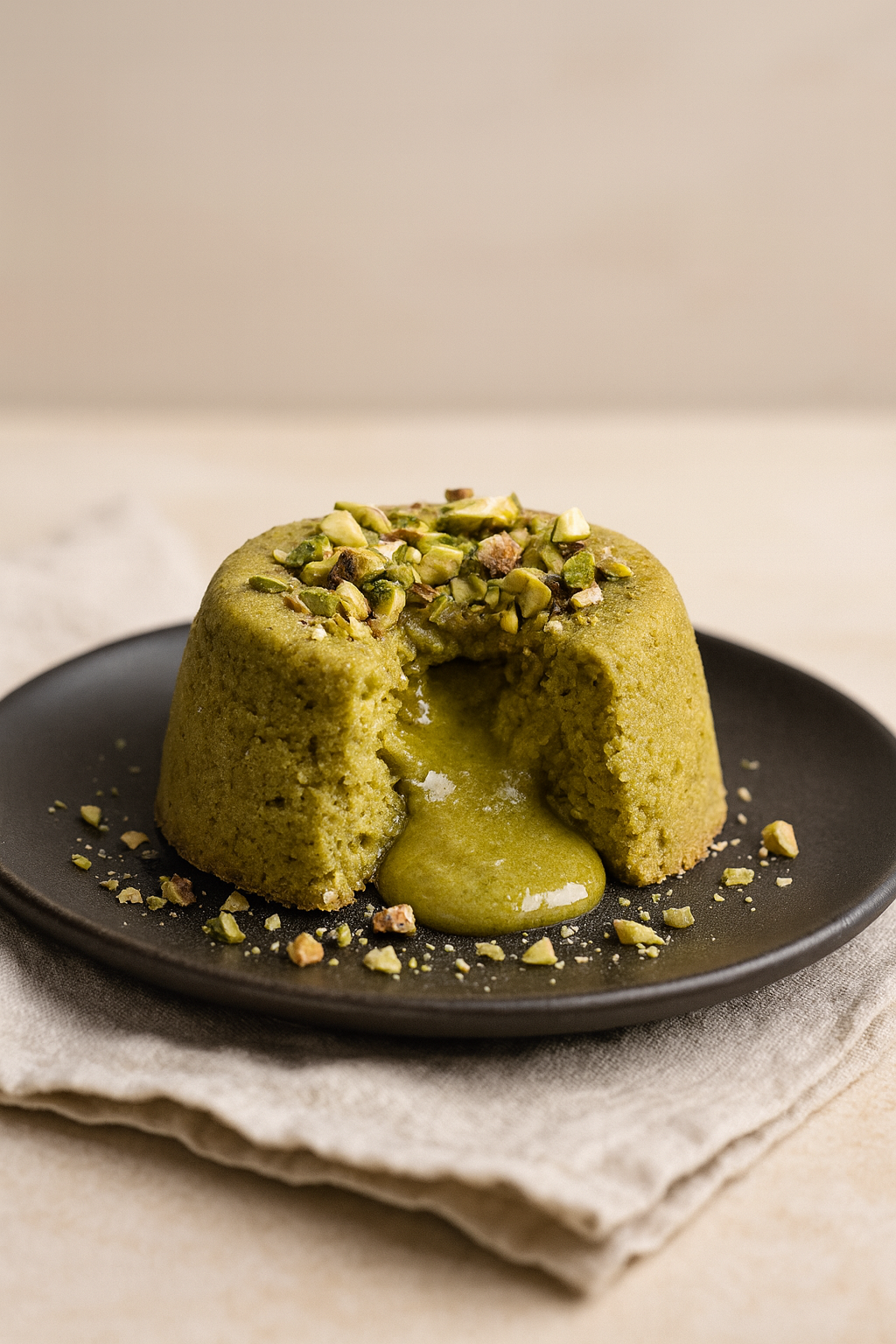
a pistachio powder latte in the afternoon = 7g extra protein in a drink that tastes like a premium dessert. this isn’t a supplement shake. it’s a latte.

add it up: +9g at breakfast, +8g at dinner, +7g as a drink. that’s 24 extra grams of protein per day — from whole foods, with zero change to your cooking routine.

6 powders, 6 meals, 6 problems solved
morning oats
peanut powder (45g/100g) — mix 2 tbsp, +9g protein
afternoon latte
pistachio powder (34g/100g) — blend with milk, +7g protein
evening curry
cashew powder (26g/100g) — stir into gravy, +8g protein
desserts & sweets
sesame powder (30g/100g) — til laddoo, halva, +6g protein
baking & snacks
almond powder (38g/100g) — dough, energy bars, +8g protein
kids' drinks
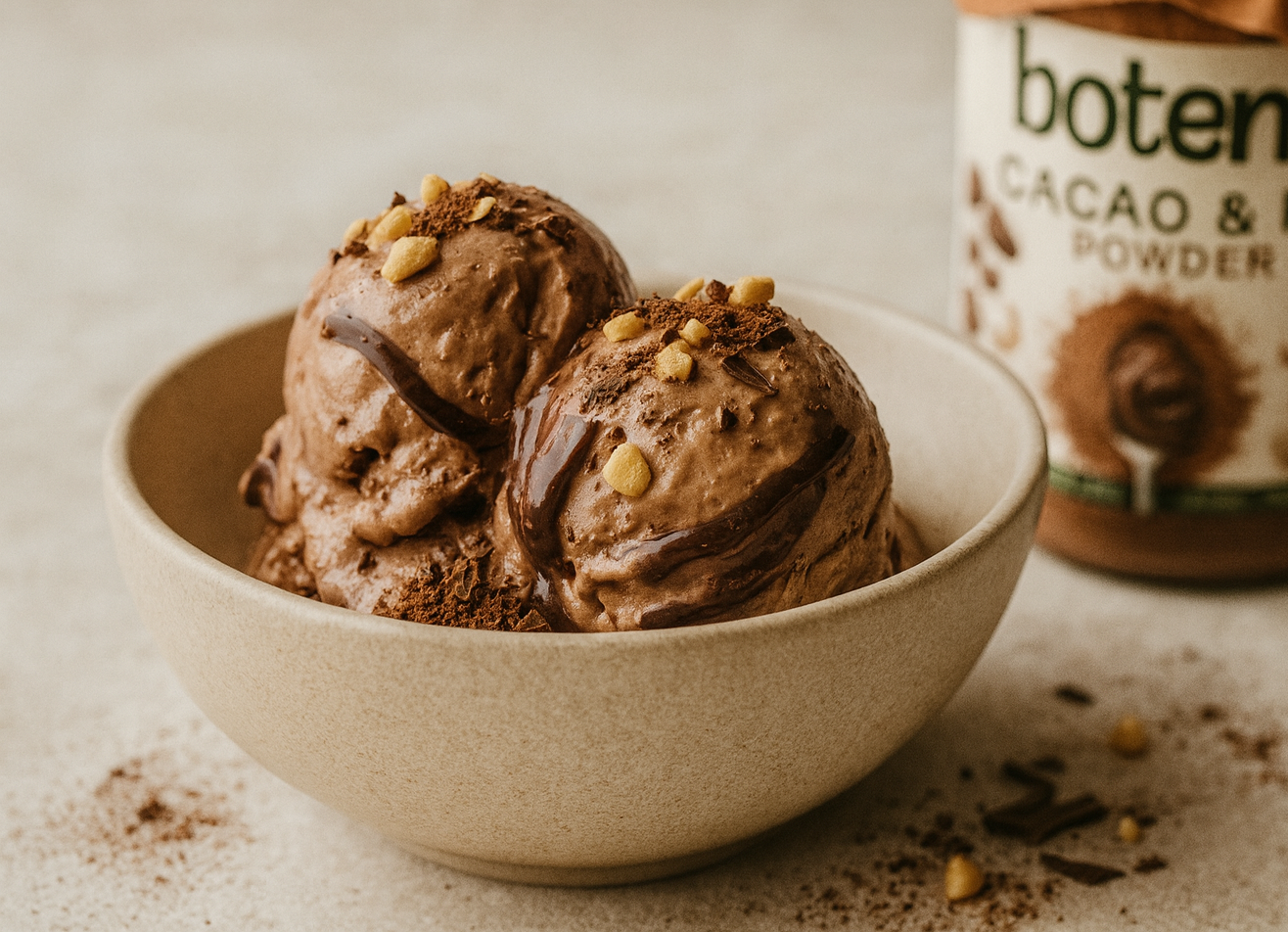
peanut cacao (40g/100g) — warm milk chocolate, +8g protein

for someone eating 40g of protein daily (India’s average), that’s a 60% increase. from powder.

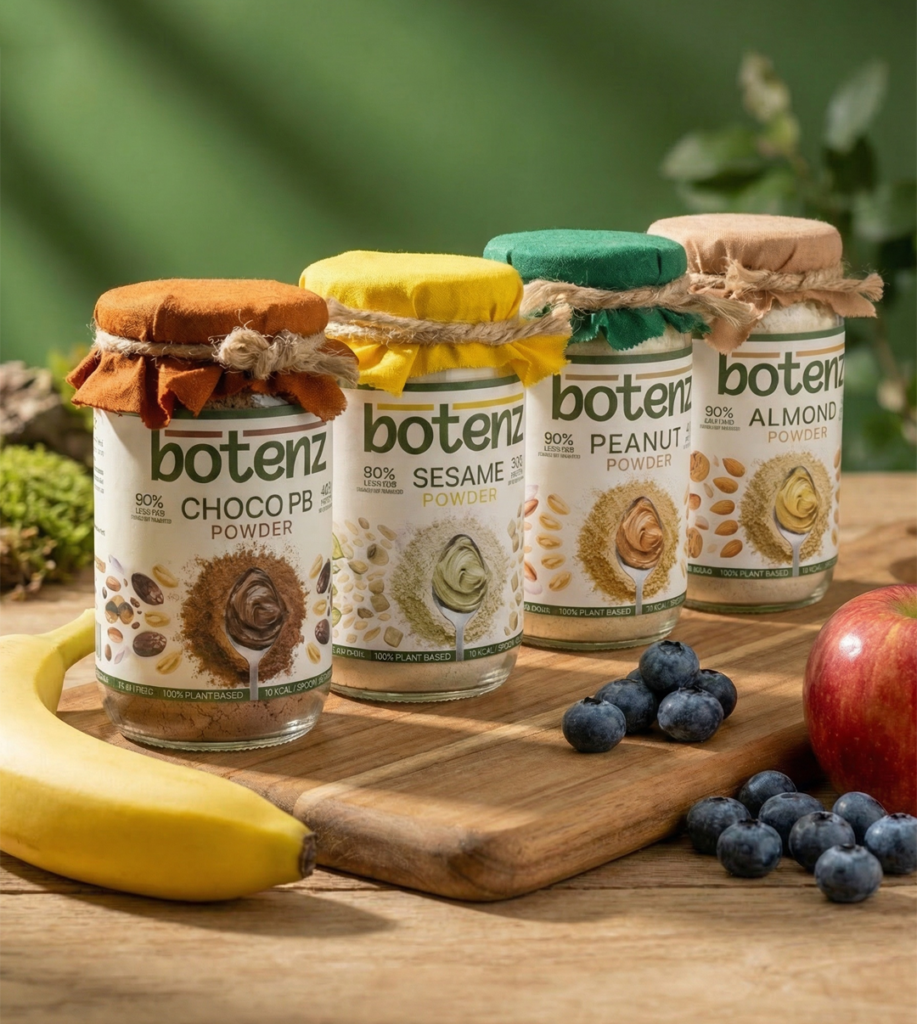
India doesn’t eat one type of nut. Indian kitchens use kaju (cashew) for cream sauces, badam (almond) for desserts and warm milk, pista (pistachio) for sweets, and til (sesame) for laddoo, chikki, and chutney. a nut butter powder brand that only sells peanut is solving the protein gap for breakfast. a brand that sells all six is solving it for every meal.


frequently asked questions
how much nut butter powder should I eat per day?
two to three tablespoons (20-30g) per day is enough to add 8-14g of protein to your diet. there's no strict upper limit — it's a food, not a supplement — but 2-3 servings spread across meals is the most practical approach.
is nut butter powder better than whey protein?
they solve different problems. whey has more protein per gram (80-90g/100g) but is a processed supplement with multiple additives. nut butter powder has less protein per gram (26-45g/100g) but is a whole food with 1-3 ingredients. for people who want protein from real food, powder is the cleaner source.
can children eat nut butter powder?
yes. it's the same nuts children already eat, in powder form. peanut cacao powder mixed into warm milk is a common way to give kids protein without them noticing. always check for specific nut allergies first.
does nut butter powder work for Indian cooking?
cashew powder dissolves into gravies the same way cashew paste does, without the prep time. sesame powder works in til chutney and laddoo. almond powder works in badam milk and payasam. it goes into the food you already cook.
is 45g protein per 100g really possible from a whole food?
yes. cold-pressing removes the oil from roasted peanuts, concentrating the protein that's already in the nut. raw peanuts have 25.8g protein per 100g with 49g fat. remove most of the fat, and the protein-to-weight ratio nearly doubles. no protein is added.

the bottom line

“India doesn’t have a protein awareness problem. it has a protein density problem. the foods are right. the format needs to catch up. we make 6 nut butter powders because Indian kitchens don’t use just one nut. nobody else makes all six. we do.”

(Elad Lavi — founder, Botenz)

למה דווקא Botenz?

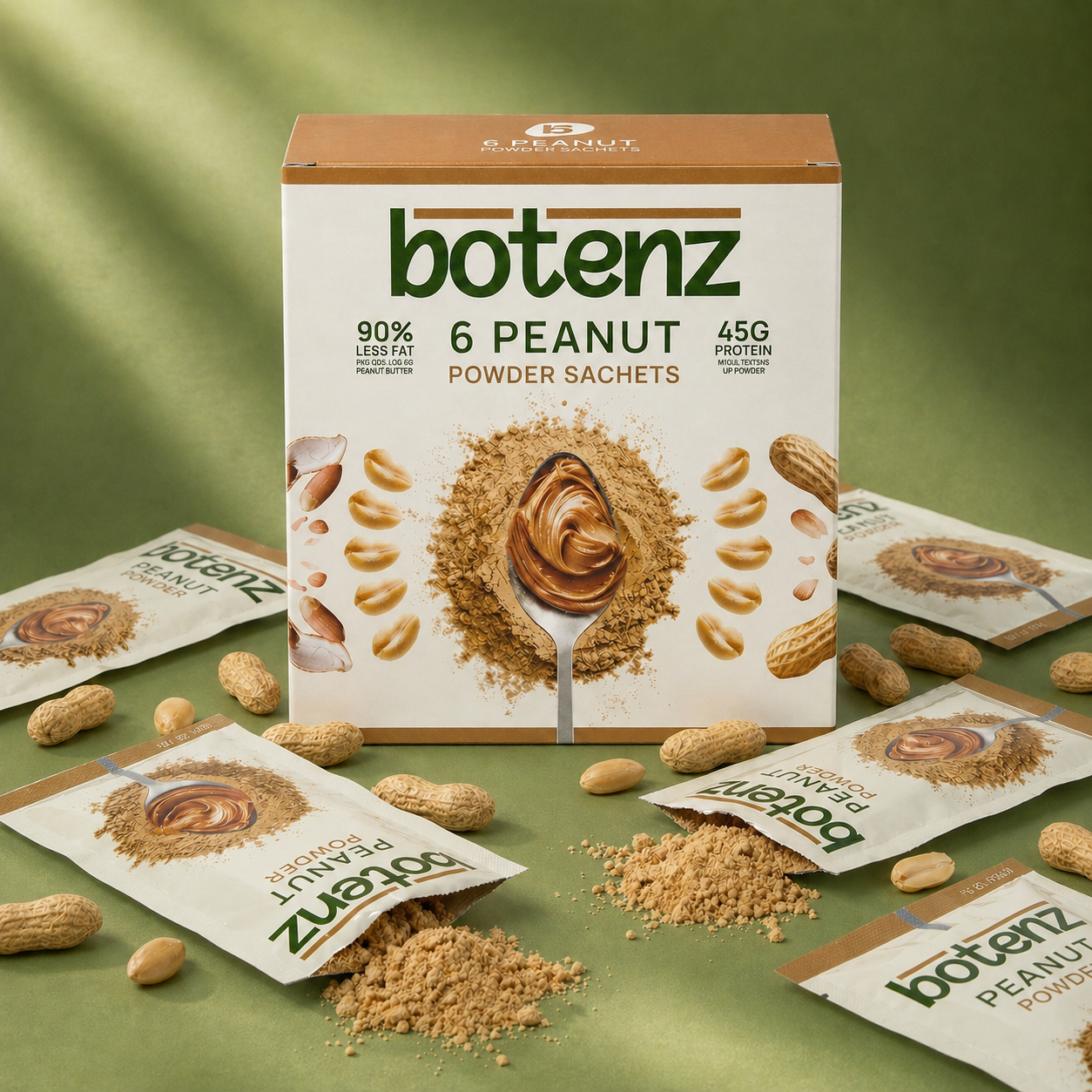
Peanut butter powder in India – product pouch front
42
קלוריות
100
קלוריות
5g
חלבון
4g
חלבון
1.5g
שומן
9g
שומן

למנה

למנה

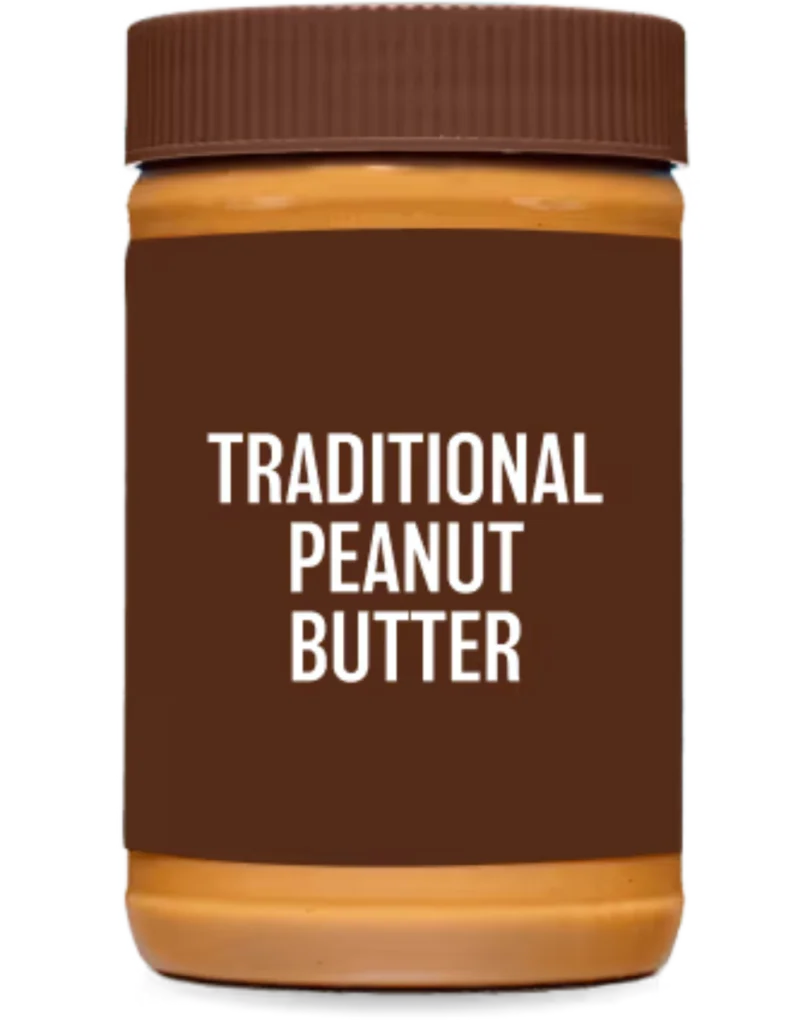
traditional most regular peanut butter picture
42
קלוריות
5g
חלבון
1.5g
שומן

למנה

100
קלוריות
4g
חלבון
9g
שומן

למנה

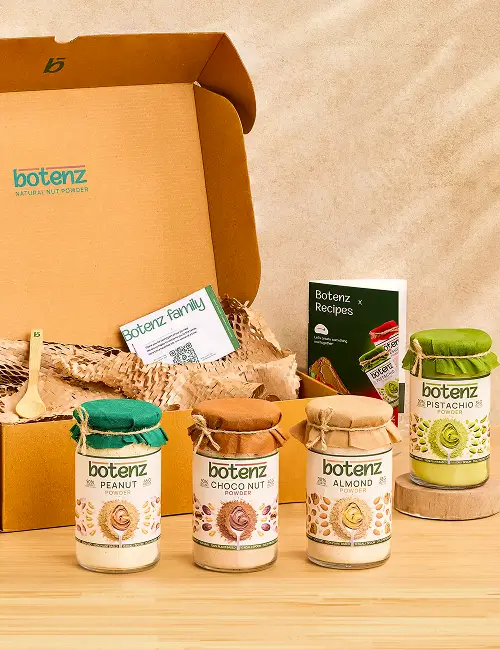
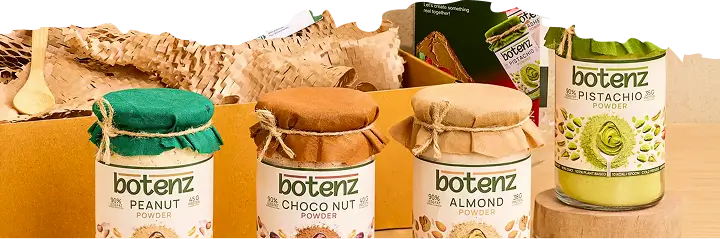
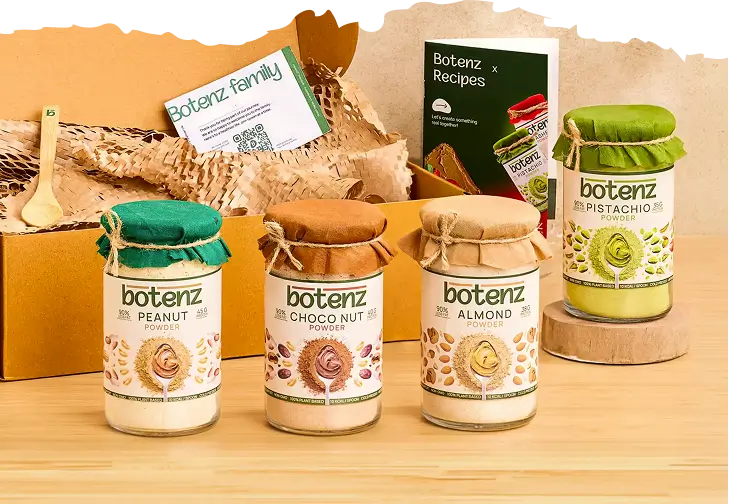
Botenz makes 6 defatted nut butter powders — peanut, almond, pistachio, cashew, sesame, and peanut cacao — cold-pressed in India from whole nuts. 1-3 ingredients, no additives. explore all 6 powders.

Elad Lavi
written by
elad lavi
founder, Botenz — solving India's protein gap with defatted nut butter powder
icons 1

more like this
Indian nutrition

icons 2

25g

protein

30

minutes

400

kcal

25g

protein

30

minutes

400

kcal

25g

protein

30

minutes

400

kcal

25g

protein

30

minutes

400

kcal

התחברו לחשבון שלכם

גישה להטבות, להפניות ולעוד הרבה

[nextend_social_login provider="google" redirect="https://botenz.co.il//"]

בהתחברות אתם מסכימים למדיניות הפרטיות ולתנאי השימוש שלנו

עדיין לא צפיתם במוצרים.
אין מוצרים בסל.

תנו ₪15, קבלו ₪15

0 הפניות הושלמו עד עכשיו

Please login to get referral url.

ניהול הזמנות, מעקב משלוחים והיסטוריה

גישה להטבות, להפניות ולעוד הרבה

בהתחברות אתם מסכימים למדיניות הפרטיות ולתנאי השימוש שלנו

ניהול כתובות, פרטי קשר והעדפות אישיות

גישה להטבות, להפניות ולעוד הרבה

בהתחברות אתם מסכימים למדיניות הפרטיות ולתנאי השימוש שלנו

Home v2
Home v2

תיהנו מההנחה המיוחדת שלכם

Home v2

משהו קטן ומיוחד, רק בשבילכם.

Home v2
Home v2

פתחו 15% הנחה

⏱︎ דקה אחת

השלימו וקבלו 15% הנחה

מהודו, אליכם

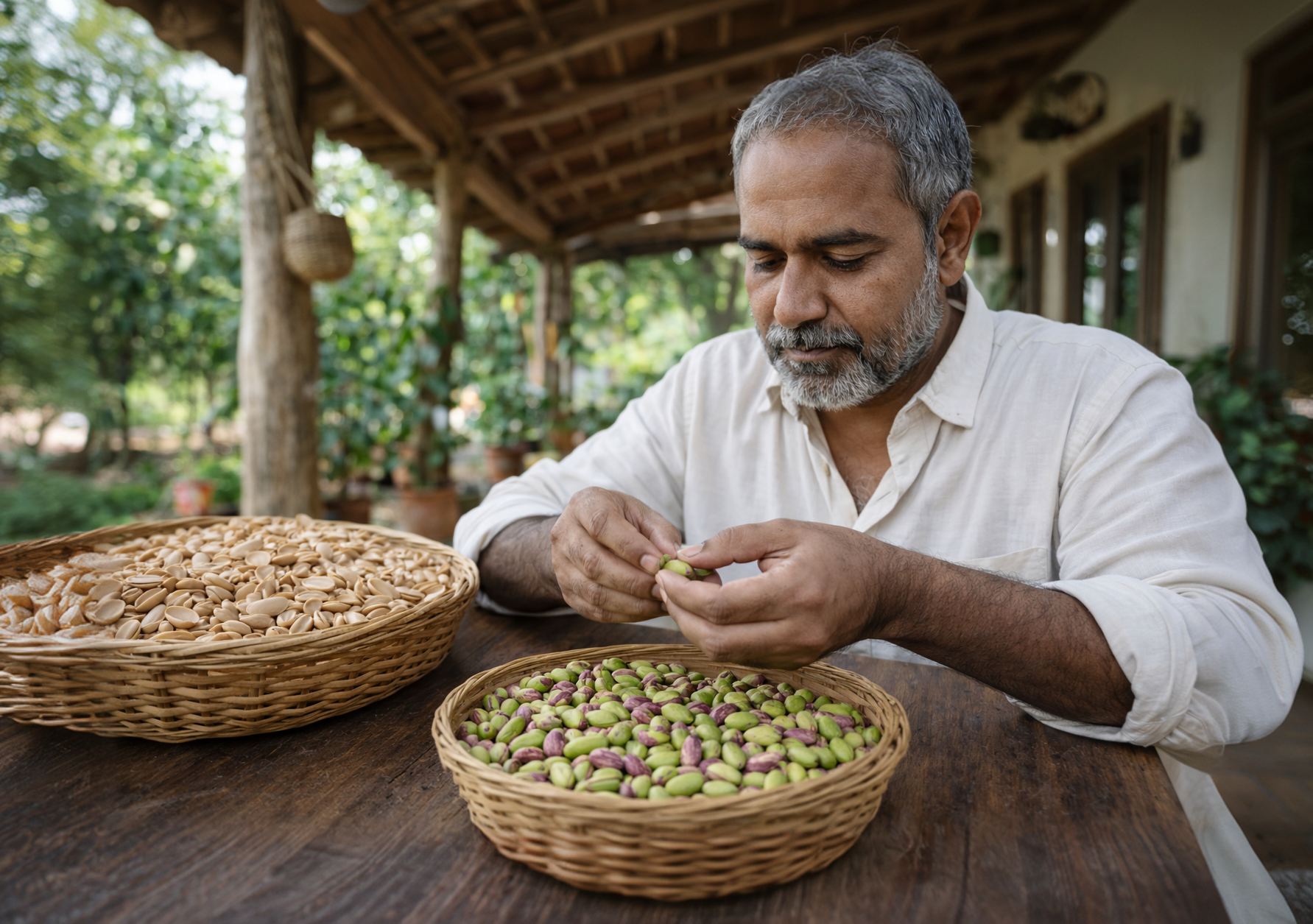
אני אלעד לביא, המייסד של Botenz. כשגרתי בהודו הבנתי משהו: לאנשים אכפת מבריאות, אבל הרבה מוצרים “בריאים” משתמשים באותם טריקים, רק עם שיווק טוב יותר.

IMG-20250522-WA0042

אז בניתי את Botenz לפי סטנדרטים אירופיים, שמרתי על מוצר נקי ופשוט והתמקדתי באגוזים: יותר מהטוב, עם הרבה פחות שמן. ועכשיו Botenz מגיעה גם לישראל.

Botenz היא המשימה שלי: שתזונה טובה יותר תרגיש טבעית. — אלעד לביא, מייסד

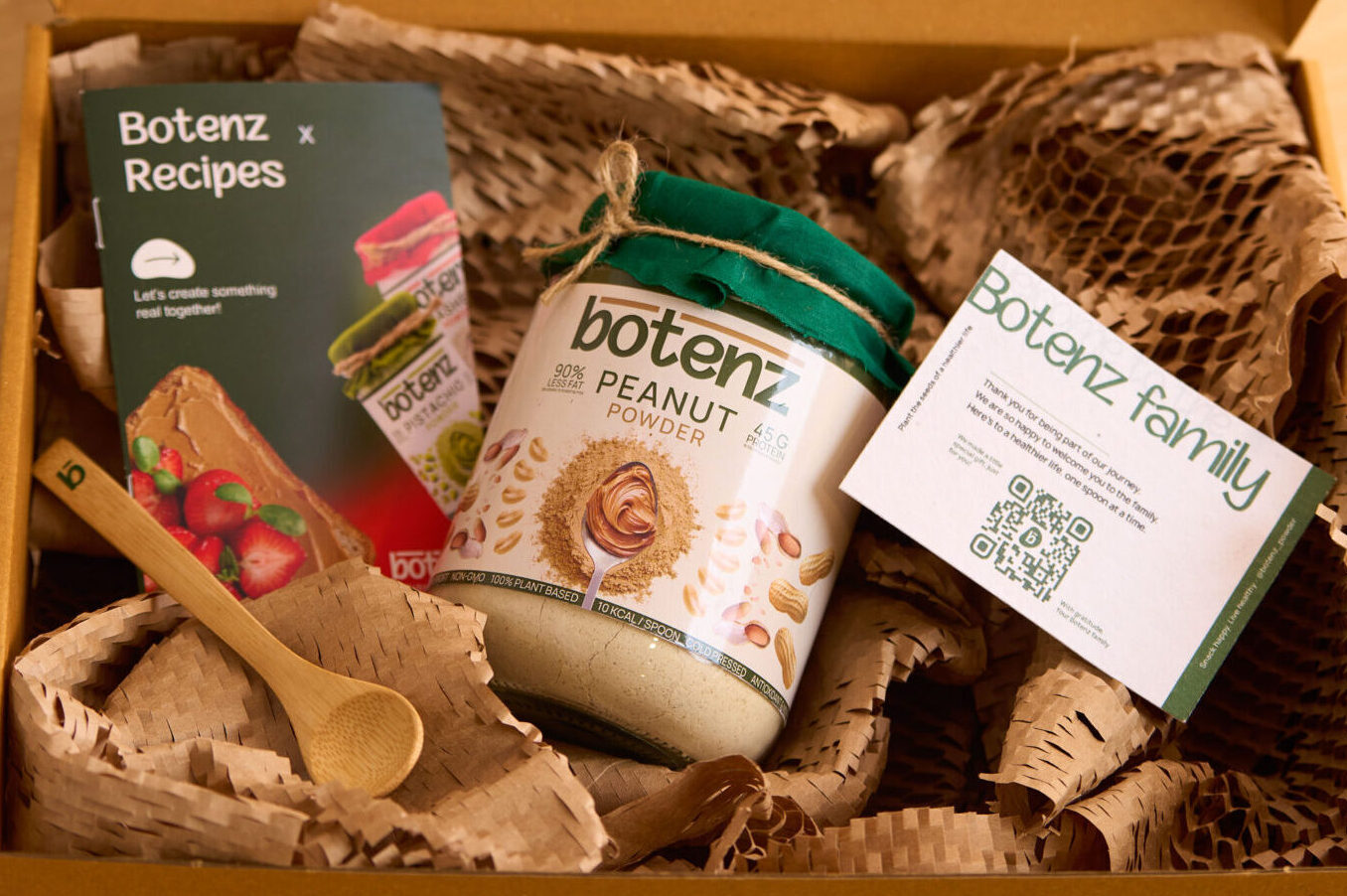
beautiful about us and info botenz jar

תזונה נקייה, בלי טריקים.

אחרים רודפים אחרי טעם עם תוספים. אנחנו נשארים אמיתיים.

אנחנו אורזים את Botenz בזכוכית ולא בפלסטיק, כדי שהאבקה תישאר טהורה: בלי מיקרו-פלסטיק, טריות טובה יותר וטעם טבעי אמיתי. בפנים יש רק 1–3 רכיבים טבעיים, בלי סוכר מזוקק, בלי חומרי מילוי ובלי מייצבים, בתהליך טבעי ככל האפשר.

Botenz קיימת כדי שתזונה טובה תרגיש טבעית: נקייה, איכותית וקלה לסמוך עליה. התחילו בצנצנת אחת וטעמו את ההבדל: אגוזים אמיתיים, פחות שמן, אפס טריקים.

מעולה! תיהנו מעוד

20% הנחה!

IMG_20260115_064309_370
Home v2
Home v2
Home v2
Botenz peanut powders logo

קבלו את

ההנחה המוגבלת

Home v2
0